The second annual Public Art Abu Dhabi Biennial has turned familiar locations across the capital into open-air exhibition sites. Titled Home: A Glossary for a Communal Sense of Place, the exhibition brings together works by 21 Emirati and international artists and collectives. It places contemporary art in public space while exploring home, identity, belonging, community and people’s relationship with their surroundings.
Ghanaian artist Serge Attukwei Clottey presents the monumental installation Wole Wohe, meaning “we know each other”. The work is made from plastic containers traditionally used to store cooking oil and later water and other everyday essentials. It draws on his family’s history of migration and fishing, as well as the European forts and castles that have influenced architecture along Ghana’s coastline. The installation took around 10 months to produce with members of his community in Labadi, before being transported to Abu Dhabi and assembled with the help of local workers.
Emirati artist Khalid Al Banna looks to the UAE’s maritime heritage in Gargour, named after the traditional fishing traps used by generations of fishermen in the Emirates. Reimagined as a large-scale contemporary sculpture, the work seeks to preserve elements of Emirati culture while presenting them in an unexpected form. Its setting in Mina Zayed also reflects the district’s role as a commercial port and maritime trading hub for more than half a century.
Mexican artist Vica Pacheco’s OO! (Oven-Organ) comprises three wood-fired ovens that also function as experimental musical instruments. Water heated inside the ovens produces steam that travels through a system of flutes, generating distinctive sounds. The idea was inspired by Mexico’s camoteros, street vendors who sell roasted sweet potatoes and bananas from mobile ovens and announce their arrival with high-pitched steam whistles. Local chefs prepare food for visitors as part of the installation while the ovens produce music.
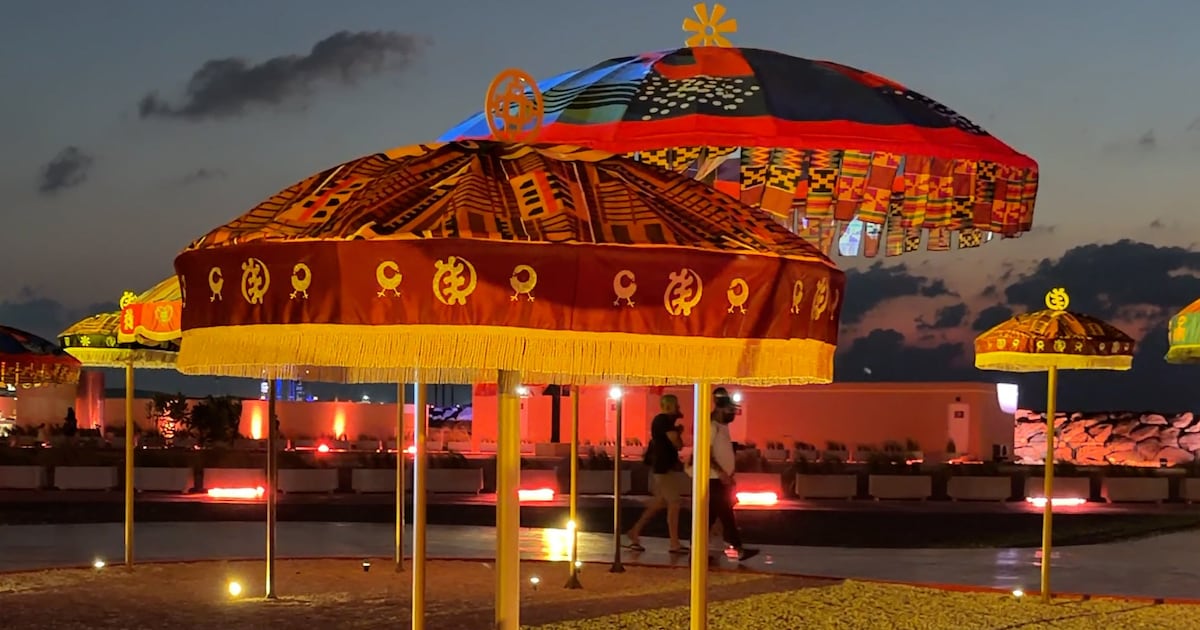
Ghanaian collective blaxTARLINES KUMASI explores shared space in AGORA: A Dance of Umbrella Forests, a cluster of umbrellas inspired by traditional Ghanaian textiles including kente, fugu and adinkra. Lebanese artist Akram Zaatari’s Above and Below depicts an olive tree entwined with an ancient sarcophagus in its roots, examining the relationship between nature and history. The biennial also offers performances, workshops, talks and guided tours. The artworks are free to visit, and Public Art Abu Dhabi Biennial continues until February 15, 2027.