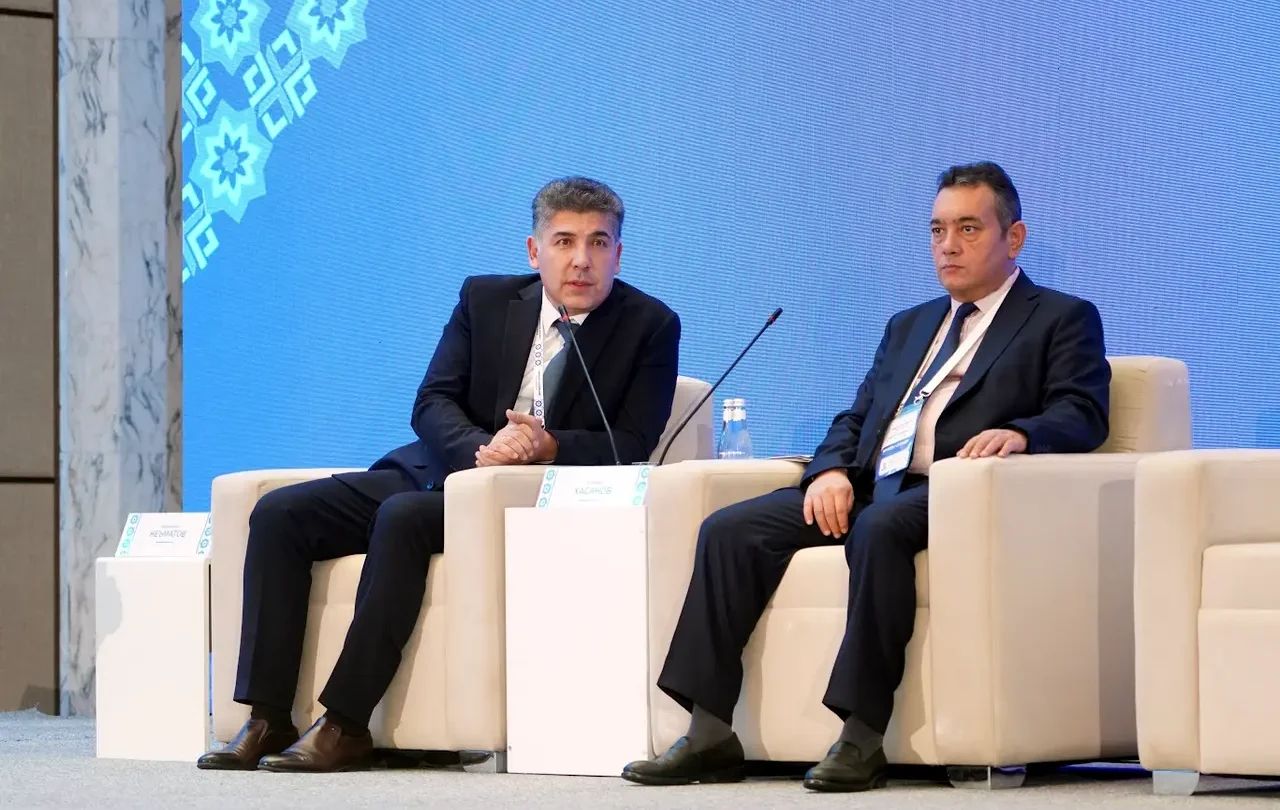
The Uzbekistan-Russia Media Forum was held in Tashkent, bringing together prominent media representatives, heads of media organizations, and figures from culture, theatre, cinema, museums, creative industries and expert circles in both countries. The event focused on areas of engagement between the two countries in media and culture.
Its agenda covered the transformation of the modern media environment, the development of digital platforms and new technologies. Participants also considered cultural and humanitarian cooperation, joint content production, and the role of media outlets and cultural institutions in further strengthening relations between Uzbekistan and Russia.
Akramjon Ne’matov, First Deputy Director of the Institute for Strategic and Interregional Studies under the President of the Republic of Uzbekistan, moderated a session titled “National Cultural Code in Media: A Harmonious Combination of Traditional Values and a Vision for the Future.” He said the current level of comprehensive strategic partnership and alliance between the two countries requires not only broader practical cooperation but also stronger public foundations of trust and mutual understanding.
According to Ne’matov, a key condition for such trust is deep knowledge of, and above all respect for, each other’s national cultural codes. He stressed that a cultural code is not a static set of traditions and symbols. It evolves with society and acquires new meanings while preserving the core values that shape a people’s self-awareness, way of thinking and attitude toward the world around them.
He said this includes historical memory, language, way of life, attitudes toward family, older generations, work, knowledge and human dignity, as well as mutual assistance and good-neighbourliness. Ne’matov noted that the cultural codes of Uzbekistan and Russia are not identical, but resonate in many ways at the level of fundamental values. He said meaningful dialogue depends not on standardizing differences, but on understanding and respecting each other’s national identity.
Ne’matov also highlighted the importance of preserving and promoting traditional values that support social stability, strengthen ties between generations and serve as important moral foundations for society. “The deeper our societies know and understand each other’s cultural codes, the stronger mutual trust will be and the more sustainable relations between our countries will become,” he said.