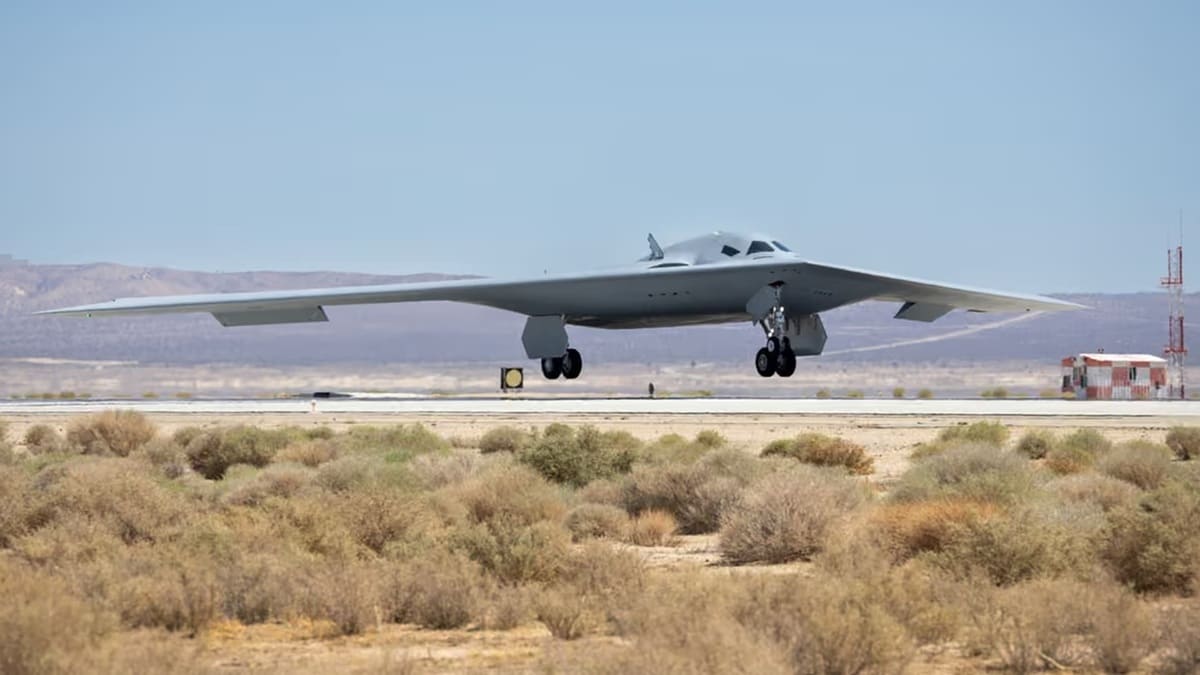
The United States’ new low-observable B-21 Raider bomber dropped a conventional bomb for the first time during a flight test. The Department of the Air Force said the aircraft’s ability to employ conventional weapons had been successfully tested. The event marked an important stage in the programme aimed at bringing the B-21 into service.
The test took place last week at Edwards Air Force Base in California. Alongside the assessment of the weapon-release process, it validated the accuracy of the aircraft’s digital models and the functioning of its open systems architecture. According to the department, engineers spent thousands of hours on computer modelling to calculate and refine the munition’s trajectory before the live test.
The weapons-release demonstration was the next step in confirming the B-21’s ability to carry and employ conventional strike weapons. Northrop Grumman, which developed the bomber, said the test aircraft demonstrated its capacity to transport and use conventional weapons. The programme is continuing through production and flight-test phases.
The US Air Force said the B-21 digital twin environment was used extensively in preparing for the test. It enabled the Joint Test Group to model the munition’s movement and make adjustments to its calculated trajectory before the actual release. The approach is intended to reduce the need for repeated practical tests during the early stages of development and speed up weapons integration. The open systems architecture is also expected to support the phased introduction of new weapon types and additional capabilities.