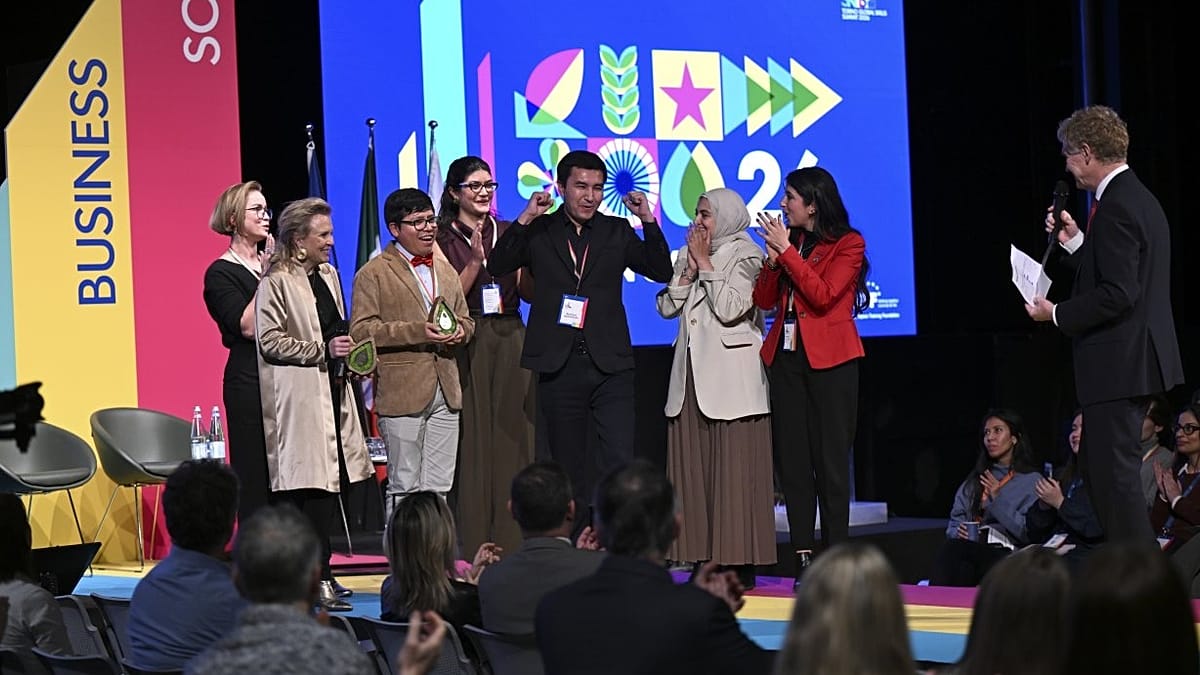
History teacher Abrorjon Sadriddinov reconsidered how environmental education was taught at his school in Namangan after noticing that students were putting organic waste into recycling bins. The initiative he developed with students went on to win the European Training Foundation’s (ETF) Green Skills Award 2026 in Turin, Italy. The Uzbek team was one of six finalists selected by an expert jury from 369 applications submitted from 94 countries, with winners decided by public vote.
The programme, called Sustainable Future Society (SFS), adapts the international Eco-Schools framework to Uzbekistan’s education system. Students identify environmental issues at their schools, develop responses and measure the impact of their work. The process gives them practical experience in critical thinking, data analysis and project management.
Within two years, the Presidential School in Namangan became eligible for the internationally recognised Green Flag certification. The initiative has since led to 128 student-led projects, ranging from recycling systems to energy-saving measures. According to the ETF, the model can be adopted by other schools without major investment or sophisticated technology.
After receiving the award, Sadriddinov stressed that protecting the environment is everyone’s responsibility and said he believed that together “we can build our sustainable future”. ETF Director Pilvi Torsti said the winning initiatives showed that “the green transition is no longer an abstract goal; it is already well under way as a process driven by communities, educators and innovators”.
The awards were presented on the final day of the Turin Global Skills Summit, held from 23 to 25 November. The summit brought together more than 250 participants from 48 countries and 80 speakers. Organised by the ETF, it focused on the role of education and training in competitiveness, employment and social cohesion. The next Turin Global Skills Summit is scheduled for 2028.