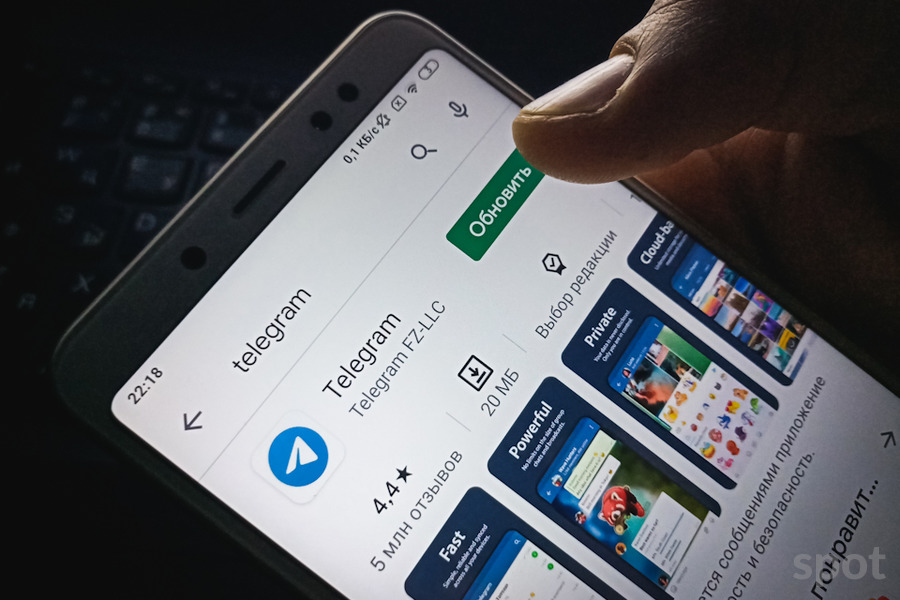
Telegram has released version 13.3 of its Android and iOS apps. The update adds speech-to-text input while recording voice messages, live captions in calls and automatic translation of typed text into other languages. It is the third major update to be released without an announcement on the messenger’s official website.
In the new dictation mode, a user’s speech is converted into text while a voice message is being recorded, with recognised words appearing in the input field. The mode becomes available automatically if the recipient has disabled incoming voice and video messages. Users can edit the resulting text before sending it or use artificial intelligence to rephrase it in a selected style.
Audio processing can take place directly on the device without sending the recording to a server. For languages not supported by language models preinstalled on the smartphone, Telegram may use Google’s speech-recognition system. During a group call or video chat, users can enable speech recognition and display the output as captions; this feature is available only to Premium subscribers.
Automatic captions are switched off by default and can be enabled by selecting Live Captions in the options menu on the call screen. They use the same speech-recognition technologies as voice-message transcription and do not work in encrypted calls between two users. The update also includes a filter that hides read chats in a chat folder, real-time typed-text translation through an AI editor for a specific chat, word and character timestamps in voice-message transcripts on Android, and a test-stage profile redesign with round buttons on iOS.