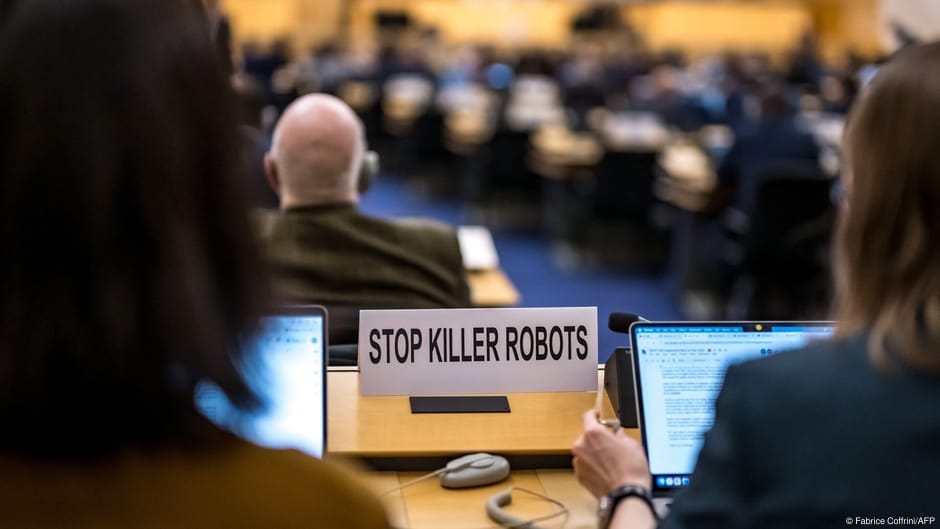
Negotiations on lethal autonomous weapons systems held in Geneva under the United Nations framework ended without a concrete, legally binding agreement. Participants in the review conference of the Convention on Certain Conventional Weapons (CCW) agreed only to develop rules concerning such weapons systems.
After five grueling days of negotiations, which were later extended, the 128 states parties to the CCW agreed to prepare an international instrument on lethal autonomous weapons systems within two years. Conference President Julien Thöni of Switzerland announced the outcome to journalists after the talks.
The compromise followed difficult negotiations under a consensus-based process. Although most countries supported a legally binding agreement, no such step was taken because the United States and Russia, which already possess the relevant technology, objected. The systems described as “killer robots” can select targets and attack without human intervention, while advances in artificial intelligence are strengthening calls for international regulation.
The Stop Killer Robots campaign, which includes more than 300 organizations, said states had adopted a “watered-down mandate” that “does not show a clear path to a legally binding instrument.” Its director, Nicole van Rooijen, said delaying such an instrument endangers civilians and humanity. Verity Coyle of Human Rights Watch said the text failed to provide urgent action while technology is advancing rapidly. UN Secretary-General Antonio Guterres and the International Committee of the Red Cross had also called for binding rules containing clear prohibitions and restrictions on autonomous weapons systems.