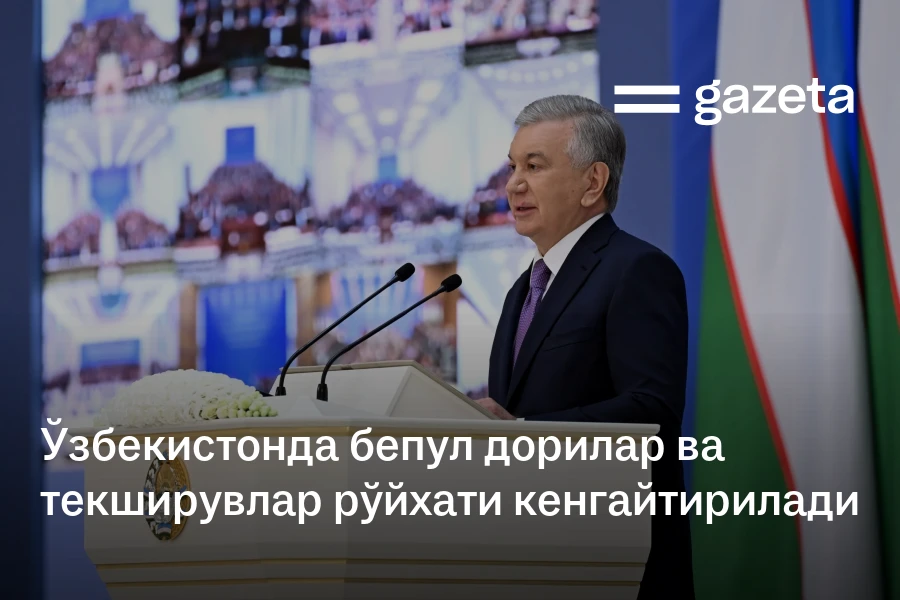
Uzbekistan is planning to expand its state-guaranteed healthcare package. President Shavkat Mirziyoyev said at an October 27 meeting with healthcare and pharmaceutical sector workers at the Kuksaroy residence that the number of free medicines in the package would increase to 73 from 2027, while the number of medical screening types would reach 36.
According to the information cited in the source, polyclinics currently provide 69 types of medicines free of charge. Of those, 28 items are supplied under the reimbursement programme, and the number of medicines covered by that programme is expected to rise to 69 from 2027. A Health Ministry representative said in February 2025 that the guaranteed volume for local polyclinics included 28 diagnostic examinations and 22 laboratory tests.
Mirziyoyev said early detection work for stomach, colorectal, prostate and lung cancer would begin in Samarkand and be introduced across all regions from 2028. Annual funding of 700 billion soums is to be allocated for the effort. Programmes for early detection of diabetes, tuberculosis, cardiovascular diseases, tumours in women and oncohematological illnesses in children are also set to continue.
The meeting also addressed reform of primary healthcare. A new model was piloted in 28 districts, where 7 million residents were personally assigned to family doctors. New laboratories were opened, training was arranged for doctors and nurses, and a patient pathway was developed to set out the process for examinations and receiving care. The model is planned to be introduced in another 100 districts from 2027.
The president also presented results from an early detection and treatment programme for heart attacks and strokes being implemented in Andijan, Fergana, Namangan, Samarkand and Tashkent. According to the figures he cited, mortality at the early stages of these conditions fell by 15 percent over five months. During the “golden hour” at the onset of illness, 855 people were saved from premature death and disability-related consequences. The programme is due to receive 280 billion soums next year and cover all districts and cities.
It was also stated that over the past ten years, new polyclinics and hospitals designed to serve 10 million people had been commissioned, while 58,000 new hospital beds had been created. The volume of medical services was said to have tripled as the network of modern facilities expanded and the private sector developed. More than 100 complex medical procedures that had previously been performed abroad are now carried out in the country, the source said.