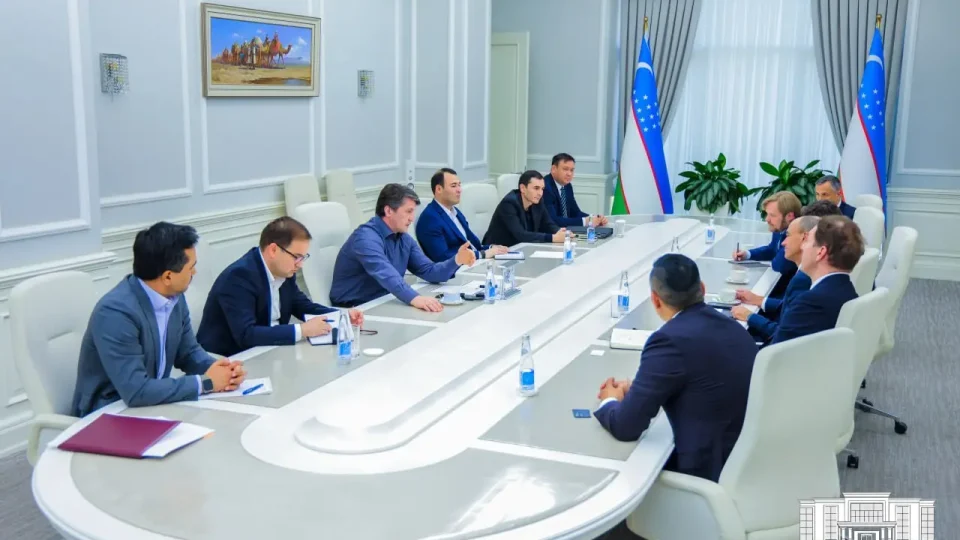
Authorities in Tashkent reviewed the results of the Rural Infrastructure Development Project (RIDP), implemented from 2019 to 2026, and presented plans for its continuation through RIDP-2. On 4 November, Uzbekistan’s Ministry of Economy and Finance and the World Bank Group held a conference focused on the first phase results and the transition to the next stage.
During the first phase, around 900 infrastructure projects were implemented in 306 mahallas across five regions of the country. More than 340 roads were built or modernised, alongside 220 electricity supply systems and 160 water supply systems. Rural areas also saw the renovation of around 100 schools, 40 preschool institutions and 10 bridges.
About 1 million rural residents benefited directly from RIDP, with women accounting for almost half of those reached. The total RIDP-2 budget will be $320 million. The World Bank will provide $150 million, the Asian Infrastructure Investment Bank will provide $100 million, and the Government of Uzbekistan will allocate a further $70 million.
The second phase will cover 296 mahallas in six regions of Uzbekistan. By 2031, it is expected to benefit approximately 1.2 million rural residents, including 600,000 women and 300,000 young people. The programme will focus not only on building and modernising infrastructure, but also on expanding economic opportunities for rural communities, supporting entrepreneurship and creating new jobs.
RIDP-2 plans to establish shared-use centres in 15 pilot mahallas for entrepreneurs involved in agricultural processing and small-scale manufacturing. The work of the “Mahalla Seven” will also be given particular importance in the new phase. Its involvement is intended to increase residents’ participation in setting local development priorities, preparing initiatives and monitoring project implementation.