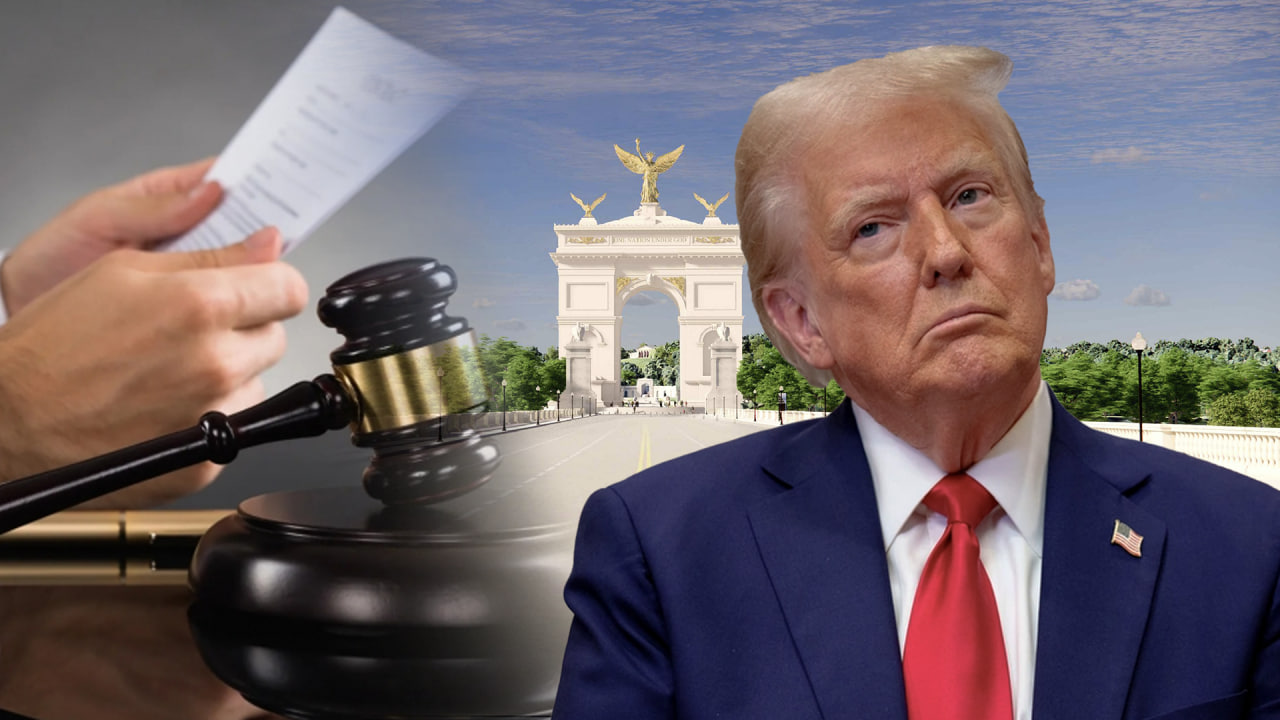
A dispute over a large ceremonial arch planned in Washington at Donald Trump’s initiative has reached federal court. Although the project received final planning approval, a federal judge ordered a 14-day temporary halt to construction-related work.
The structure is planned to stand about 76 metres, or 250 feet, high at Memorial Circle between the Lincoln Memorial and Arlington National Cemetery. Images released by the White House show a white arch with gold-toned ornamentation and three large statues at its summit.
The administration has presented the project as a symbol of celebrations marking 250 years of US history and of honouring the country’s military service members. Opponents include Vietnam War veterans and representatives of the city of Washington and the state of Virginia, who argue that a project of this scale requires the relevant approval from Congress.
Those opposing the project have also raised concerns about potential effects on traffic, the local environment and the historic setting of Arlington Cemetery. The central legal issue concerns a law adopted in 1925, which the administration cites as the basis for the project; the plaintiffs contend that it does not provide sufficient authority to build a new monumental structure.
The National Capital Planning Commission approved the project on 5 November by a vote of 8 to 4. On the same day, however, federal judge Tanya Chutkan issued a 14-day temporary injunction covering excavation, demolition, site preparation, installation of utilities and road closures.
In her preliminary assessment, the judge said the plaintiffs’ objections that the government may not have completed required legal procedures had a serious basis. The court also noted that starting construction could cause harm related to traffic and other infrastructure.