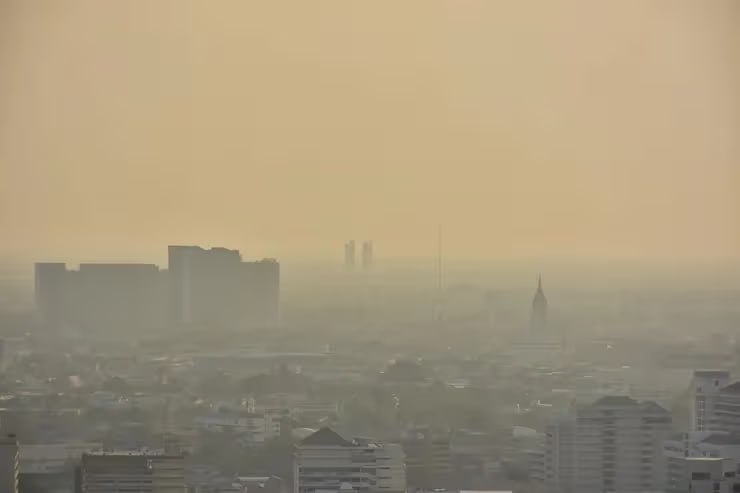
Kazakhstan’s meteorological service, Kazhydromet, has disputed the assessment that deteriorating air quality in Tashkent was linked to dust transported from Kazakh territory. The agency said its analysis did not confirm its Uzbek counterparts’ statement that dust flows from the neighbouring country could have been among the possible causes of poorer air quality in the Uzbek capital.
Kazhydromet specialists examined the movement of air masses around Tashkent, Saryagash and Shymkent from November 15 to 22. According to the agency, winds during that period predominantly blew from the southwest, from the direction of Iran, the Kyzylkum Desert and southwestern regions of Uzbekistan.
The meteorologists also used the HYSPLIT model developed by the United States’ National Oceanic and Atmospheric Administration. Kazhydromet said the calculations did not show a direct transport of air masses from Kazakhstan to Uzbekistan’s capital.
The agency added that over the past decade, air from the Saryagash area had moved toward Tashkent in only 3-5% of cases. Its specialists said it was therefore premature to conclude that Kazakh territory was the source of elevated PM10 and PM2.5 particle concentrations in the Uzbek capital. Kazhydromet listed transport, heating, industrial enterprises and construction sites among possible internal sources of air pollution in Tashkent. Earlier, Uzhydromet warned that unfavourable meteorological conditions could worsen air quality in Tashkent in the final days of November.