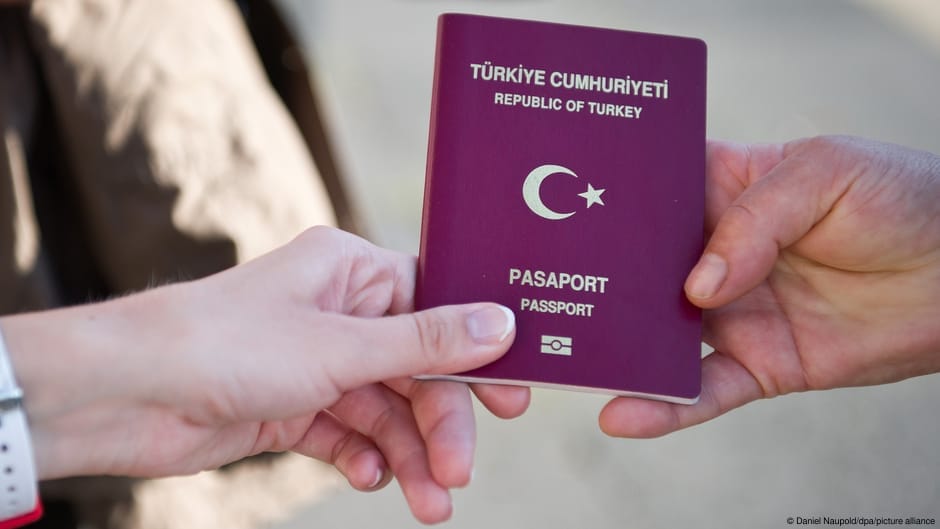
Turkey is preparing work on the six remaining criteria in its visa-liberalisation dialogue with the European Union (EU), which began in 2013. Foreign Minister Hakan Fidan said on 19 November, during discussions of his ministry’s 2027 budget at the Turkish Grand National Assembly’s Planning and Budget Committee, that work on the final draft was nearing completion. He said the text would be brought before parliament after the budget discussions. Of the 72 criteria set under the dialogue, 66 have been met.
Vice President Cevdet Yılmaz had announced that work on the criteria resumed on 8 August with the participation of the foreign affairs, justice and interior ministries. He highlighted personal data protection, counterterrorism legislation and the readmission agreement, and said that a scientific board had been established within the Justice Ministry. In its 2026 Türkiye Report released last November, the European Commission said none of the six remaining criteria for visa liberalisation had been fulfilled.
During the budget talks, Fidan cited 2023-2025 figures and said the approval rate for Schengen visas stood at 85.4 percent, while applications for travel, business and education had increased. According to the European Commission’s latest full-year data, about 1.268 million applications for short-stay Schengen visas were lodged at consulates in Turkey in 2025. Turkey ranked second after China in the number of applications. Consulates issued about 1.072 million standard Schengen visas, while the refusal rate among decided applications was 14.6 percent. The number of applications was about 8 percent higher than in 2024.
At a Local Schengen Cooperation meeting in Ankara on 18 November, the Turkish side called for difficulties in securing appointments to be addressed, applications to be processed more quickly, the number of requested documents to be reduced and procedures for people who had previously obtained a Schengen visa to be eased. Ankara also asked for wider use of the Cascade Visa Regime, uninterrupted access to the Schengen area for Turkish truck drivers to prevent disruptions to trade, and a solution to restrictions on the length of stay. The European Commission says short-stay visa applications are normally processed within 15 days, although that period can be extended to 45 days when further scrutiny is required. Those timeframes do not include the wait for an appointment.
The cascading visa arrangement adopted by the European Commission on 15 July 2025 makes it easier for Turkish citizens living in Turkey and applying there for short-stay Schengen visas to obtain multiple-entry visas with longer validity. Applicants who used their previous visa in line with the rules and apply again within one year of its expiry can receive a six-month multiple-entry visa. Subject to the conditions, later applications can lead to one-, three- and five-year visas. The share of multiple-entry visas among visas issued rose from 65 percent in 2024 to 68.7 percent in 2025. The arrangement does not, however, cover truck drivers applying for visas for professional purposes.
Fidan had also said that electronic checks of length-of-stay limits at the border following Bulgaria’s accession to the Schengen area had caused bottlenecks for Turkish drivers making frequent trips. Following contacts with Bulgaria, a temporary extension was secured, while options including long-term national visas for drivers are being considered with the EU for a permanent solution. The Foreign Ministry also said disruptions in visa procedures had created conditions for the emergence of so-called consultancy companies that make it harder for people to obtain appointments and do not operate legally.