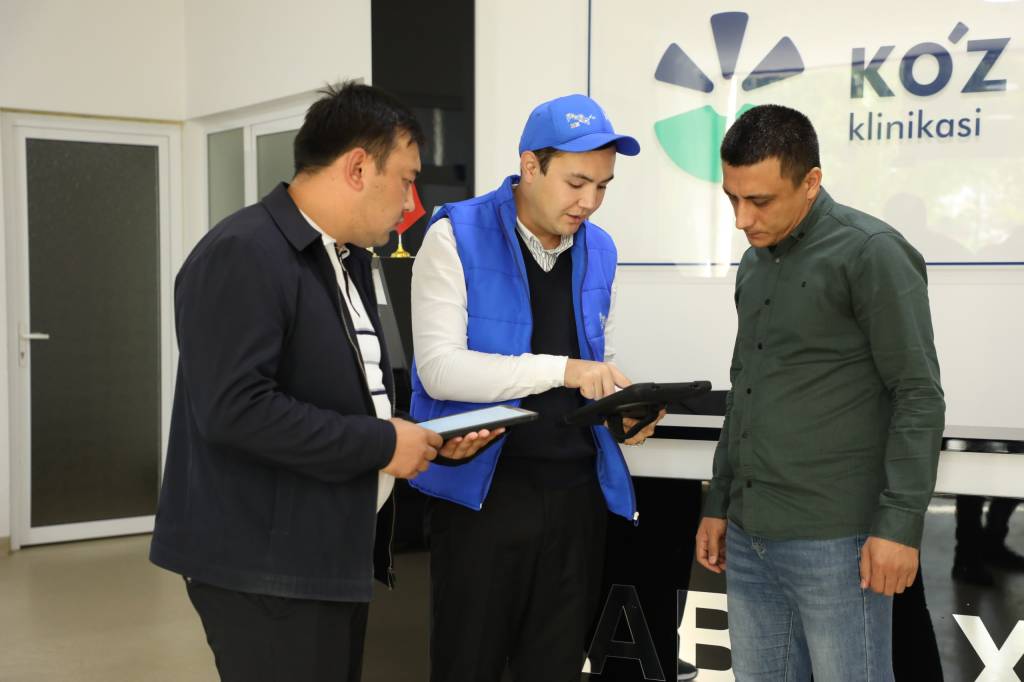
Uzbekistan is holding its first business registration exercise from 15 October to 30 November 2026. Information is collected through face-to-face interviews or online, depending on the organisational and legal form of the economic unit. Registration staff visit the operating addresses of legal entities and enter general information into a tablet-based questionnaire, including the entity’s name, organisational and legal form, actual operating address, area of activity and contact details.
Legal entities independently submit detailed information on their economic activity online through the hisobot.stat.uz (eStat 4.0) information system. Information on individual entrepreneurs, family entrepreneurs, craftspeople and other economic units in this category is collected entirely through face-to-face interviews conducted by registration staff using tablets. Self-employed persons may independently complete the registration questionnaire online through the census.stat.uz information system.
Where an entrepreneur works in more than one area, all lines of activity are reviewed. The main activity is determined by the area that generates the greatest added value. If added value cannot be determined, the activity with the highest turnover is treated as the main one. The exercise also examines information on foreign nationals working at enterprises. Where such workers are present, their average number in 2025 is recorded.
Existing information held by state bodies may not always fully reflect an enterprise’s actual operations, according to the explanation. The registration exercise therefore clarifies the real operating status of economic units, employment levels and key economic indicators. Non-governmental non-profit organisations are also covered. Receipts from services and other economic activities are taken into account, while subsidies allocated from the state budget and other financing funds are not counted as income from economic activity.
Hokim assistants take part in registering enterprises, organisations, individual entrepreneurs and other economic units in the mahallas assigned to them, using face-to-face surveys conducted with tablets. They also participate in covering economic units operating in the mahalla without registration. Data on the number of formal and informal workers are collected to assess employment across sectors, the scale of business activity and employment conditions in the labour market. The information is not collected for control or labour inspection purposes, but to produce reliable aggregated statistical indicators.
A call centre using the short number 1851 has also been launched to answer questions that may arise during the exercise.