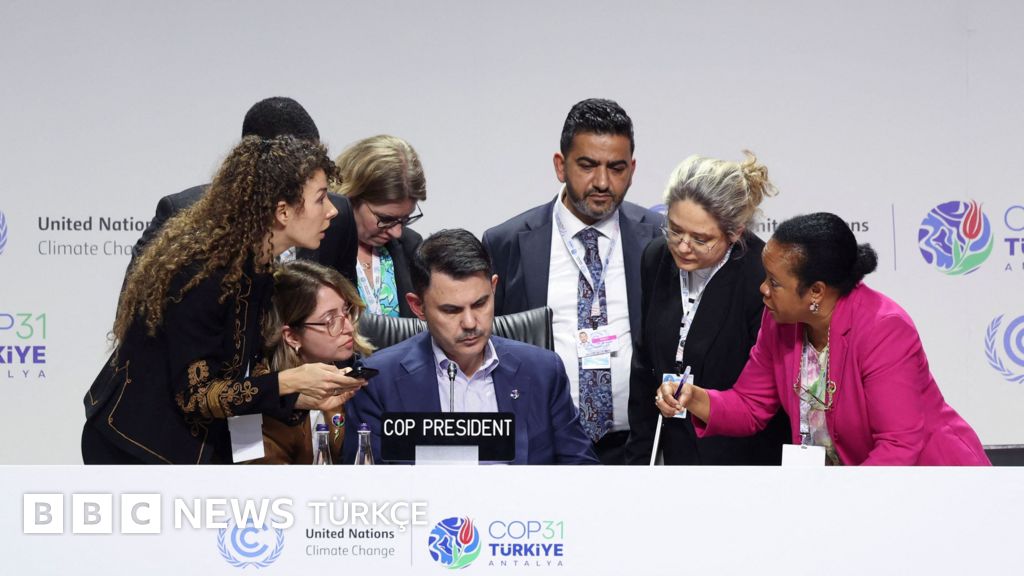
Delays continued during the extended negotiations at the UN climate conference COP31, which had been due to end on Friday, 20 November. A new draft agreement was published before dawn on Sunday in talks co-chaired by Türkiye and Australia, with the aim of bridging divisions between countries. Whether governments will accept the text is due to be discussed at a Sunday morning plenary session.
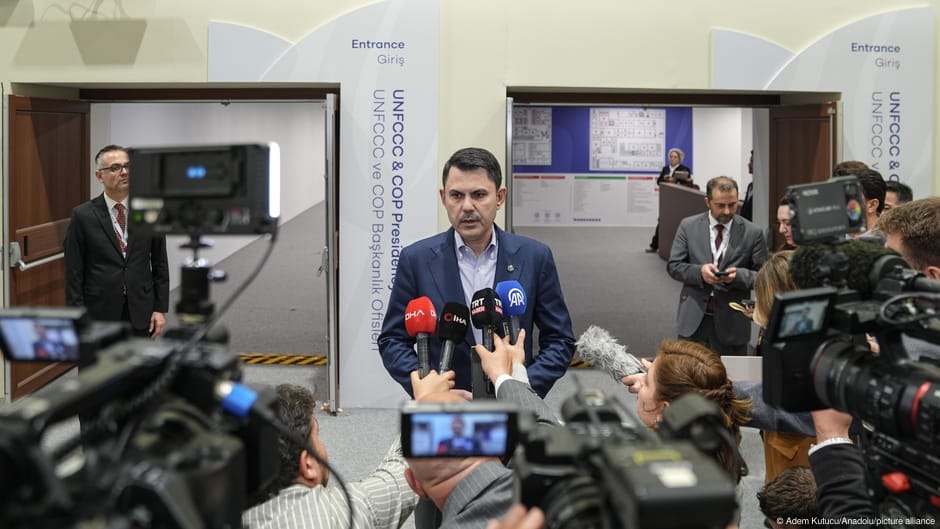
The latest draft again does not explicitly include language on “moving away from fossil fuels”. Some countries had previously identified such wording as a condition for continuing the negotiations. However, the text acknowledges the commitment countries made in that direction three years ago. COP31 President Murat Kurum said he was “hopeful” of a breakthrough and told delegates: “We ask you to consider this decision carefully. We are closer than ever to agreement on the remaining issues.”
The European Union and Pacific countries had opposed the removal of fossil-fuel language from the draft. After pressure led by Saudi Arabia to remove the reference, ministers from Panama, the Solomon Islands, Côte d’Ivoire and the European Union pressed for a commitment to move away from fossil fuels to be restored to the final agreement. Panama’s Environment Minister Juan Carlos Navarro said a COP or outcome decision that made no mention of fossil fuels would be unacceptable. Tuvalu Climate Minister Maina Talia described the issue as a “red line” for his country.
The draft does not set a concrete target for funding to help vulnerable countries adapt to the climate crisis, an issue previously criticised by the African Group. It also acknowledges for the first time that the world is on course to miss the goal of keeping temperature rise below 1.5°C. The agreement, formally known as the Antalya Consensus, could become the first climate agreement to acknowledge that the target set under the Paris climate agreement has not been met. If countries fail to reach agreement, the talks could be suspended until next year.