Chinese private space company LandSpace has said that nine rocket engines returned to Earth after a spaceflight have been cleared for reuse. All nine oxygen-methane TQ-12A engines from the first stage of the Zhuque-3 Y2 rocket passed ground acceptance tests, the company said. The result brings China closer to reusing a previously flown rocket stage on an orbital mission.
The TQ-12A engines were used during the August 19 flight. After completing its orbital mission, the rocket’s first stage landed on land using deployable landing legs. It was the first landing of its kind in the history of China’s space programme.
Following the landing in Gansu province, the engines were removed one by one and sent to LandSpace’s engine manufacturing facility in Huzhou, Zhejiang province, for maintenance and reuse assessments. The company said post-flight inspections confirmed the engines’ condition and showed a high level of consistency in the data collected. Comparisons with pre-launch telemetry found that their operating performance met the specified requirements.
LandSpace estimates that the first stage accounts for about 70% of the total manufacturing cost of a Zhuque-3 rocket, while propellant makes up only 1–3% of launch costs. Reusing the nine-engine assembly could significantly reduce the cost per kilogram of payload delivered to orbit. The company aims to reduce the cost of putting one kilogram into orbit with Zhuque-3 to about $3,000.
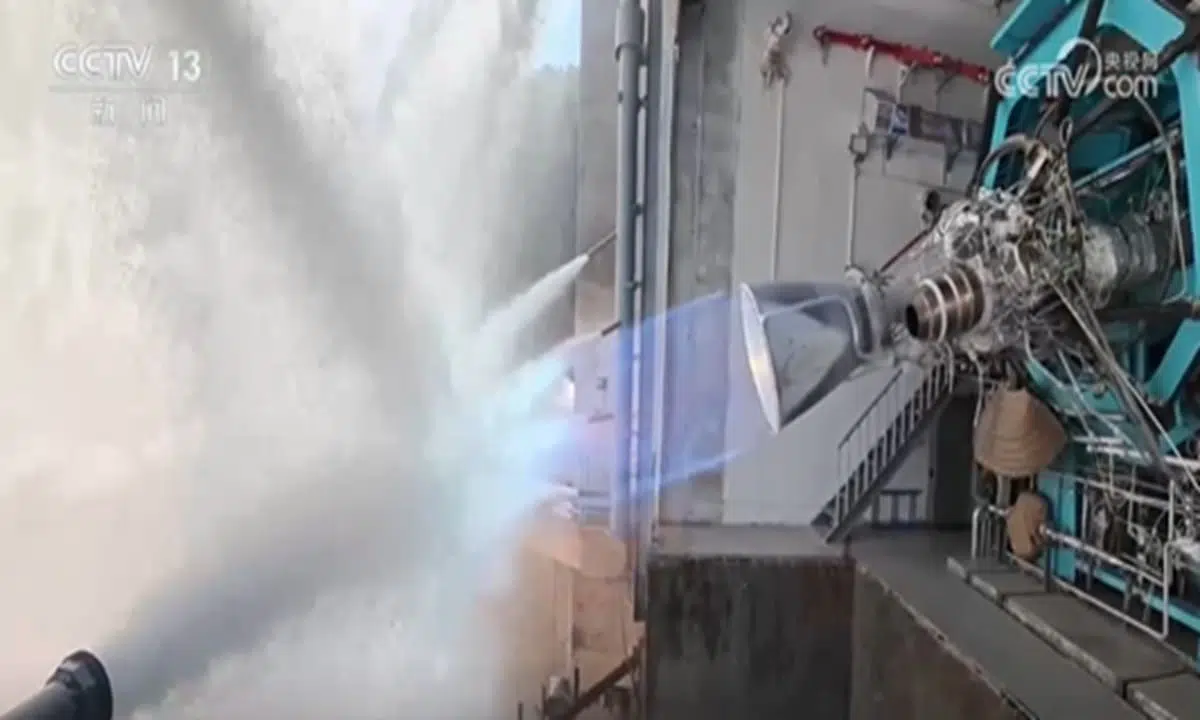
LandSpace said it carried out comprehensive maintenance and restart testing on TQ-12A engines that had flown in space and returned to Earth. During hot-fire tests lasting about 185 seconds, the engines were tested at different thrust levels and with different propellant-component ratios. The company described the outcome as confirmation that refurbishing and reusing engines recovered after flight is engineeringly feasible.