A new study published in the peer-reviewed journal Nature Astronomy suggests that extensive sections of the Milky Way structure known as the outer Norma Arm may not be a spiral arm containing stars after all. Researchers say much of the region could instead consist of shock fronts created by moving gas. The finding could prompt a substantial reinterpretation of the galaxy’s structure.
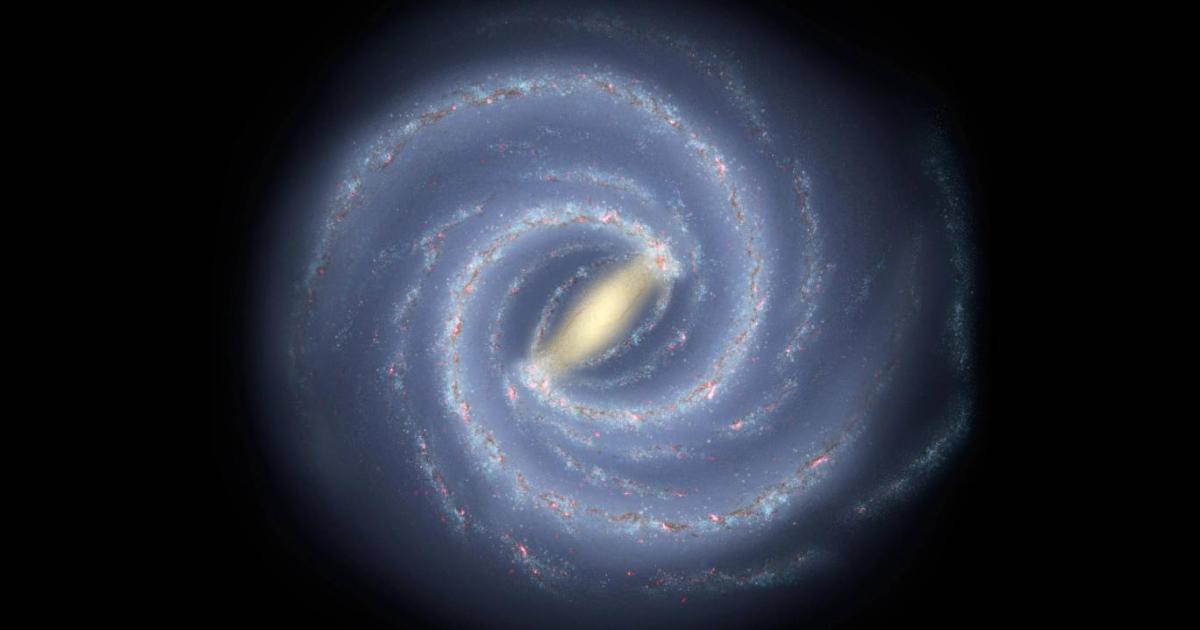
The Milky Way is known as a barred spiral galaxy with four main spiral arms. At its centre is an elongated concentration of stars known as the galactic bar, which rotates and exerts gravitational force on surrounding gas. Until now, some sections of the Norma Arm have been mapped using microwave and radio signals thought to originate from massive stars.
The study says that much of the feature identified as the Norma Arm may be shock fronts in gas clouds produced by the gravitational influence of the galactic bar. Observations of other galaxies indicate that star formation is generally suppressed along such shock fronts even where gas is abundant. Hillary Davis, one of the study’s authors, said: “This suggests that at least part of the structure called the Norma Arm may not actually be a spiral arm, but a star-forming region extending along the leading edge of the galactic bar.”
The scientists compared computer simulations of galaxies evolving over billions of years with astronomical observations of energy emissions known as masers. Masers are the microwave equivalent of lasers. Davis said the galactic bar is difficult to observe because of our position within the galaxy and dust that obscures the view, adding that comparing new-generation large-scale simulations with a more limited set of observations has improved understanding of the Milky Way’s bar and star-formation processes.
The research also provides new evidence on the size, orientation and rotation of the Milky Way’s central bar. Those properties have been debated for decades. The findings point to the need for further work on the galaxy’s spiral structure and its bar region.