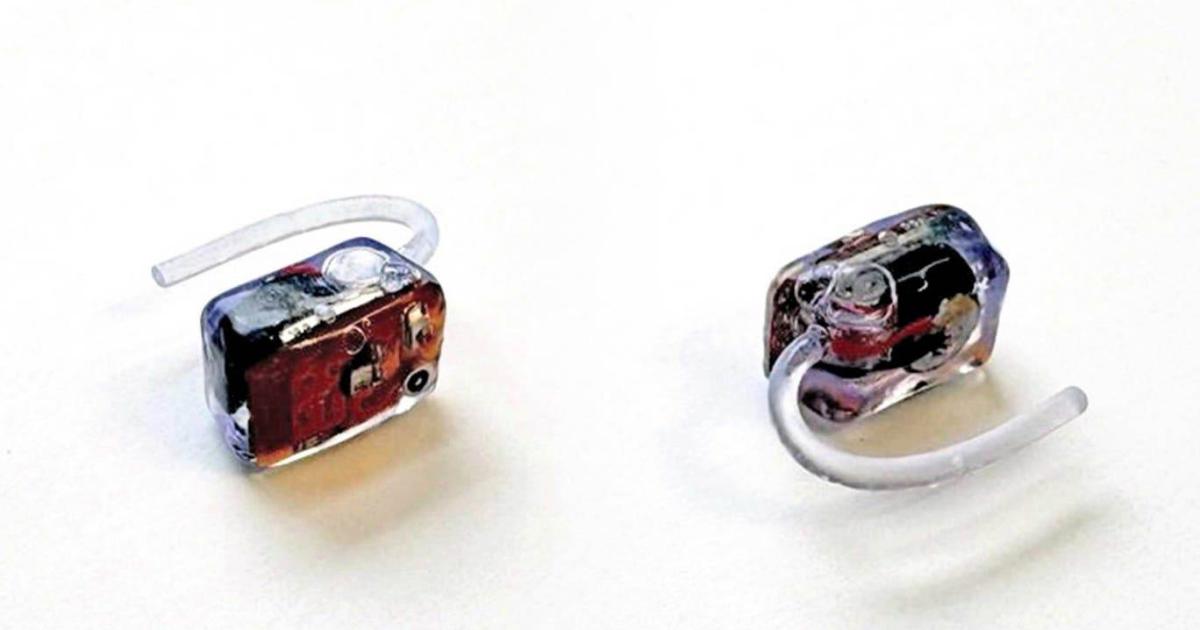
Researchers at ETH Zurich in Switzerland have developed InvisiSpeech, a device designed to let users communicate silently with artificial intelligence assistants. The team describes it as “a device straight out of James Bond films”. InvisiSpeech is intended to enable private interaction with AI without speaking aloud, moving the lips or using the hands.
The device is placed between the back molar and the cheek. It works by detecting the tiny vibrations generated when a person forms words with their tongue. The signals are then sent to a smartphone, where an artificial intelligence model developed by the researchers decodes them and carries out the commands.
Yijing Jiang, a doctoral student working on the project, said: “The device is so small that it can be comfortably worn in the mouth.” Unlike brain-computer interfaces that allow people to communicate with computers through their thoughts, InvisiSpeech does not require invasive surgery to be fitted or removed. When paired with an earpiece, it could provide two-way communication without people nearby hearing the user or even noticing that an AI assistant is being used.
Christian Holz, a computer science faculty member at ETH Zurich and the research lead, said: “InvisiSpeech enables us to interact in fundamentally new ways: invisible command input to artificial intelligence through natural language.” In a study involving 15 participants, the device correctly recognised 90 percent of 50 predefined commands, although it had to be calibrated individually for every user. Researchers said it could be used to control AI glasses and in offices, meetings or public spaces where users do not want to disturb others. They hope further development will enable natural conversations with AI. ETH Zurich is continuing to develop InvisiSpeech with Aarhus University in Denmark and Pennsylvania State University in the United States.